Links for 2025-01-03

AI:
This post gives a timeline of AI capabilities up to 2030, with a takeoff starting around 2028. What's fascinating is that the period of 2027-2030 has been included in predictions of the start of an AI takeoff for decades (1993, Vernor Vinge; 1999, Ray Kurzweil; 2009, Shane Legg). https://www.lesswrong.com/posts/bb5Tnjdrptu89rcyY/what-s-the-short-timeline-plan
How to unlock advanced reasoning via scalable RL? PRIME (Process Reinforcement through Implicit Rewards) and Eurus-2, trained from Base model to surpass Qwen2.5-Math-Instruct using only 1/10 of the data. https://curvy-check-498.notion.site/Process-Reinforcement-through-Implicit-Rewards-15f4fcb9c42180f1b498cc9b2eaf896f
Meta Memory Layers at Scale. This work takes memory layers beyond proof-of-concept, proving their utility at contemporary scale https://arxiv.org/abs/2412.09764
Fourier Position Embedding: Enhancing Attention's Periodic Extension for Length Generalization https://arxiv.org/abs/2412.17739
What does it mean to give a model a capability? And while we’re on the subject, how do you give a model a capability? https://zhengdongwang.com/2024/12/29/2024-letter.html
Towards Benchmarking LLM Diversity & Creativity https://gwern.net/creative-benchmark
An analytic theory of creativity in convolutional diffusion models https://arxiv.org/abs/2412.20292
Do NOT Think That Much for 2+3=? On the Overthinking of o1-Like LLMs https://arxiv.org/abs/2412.21187
“We are releasing code to train agents that can do challenging multi-step tasks in biology research. We’ve used this code to train agents built on small open source models to accuracies exceeding frontier language models and human PhD researchers at dramatically lower cost.” https://www.futurehouse.org/research-announcements/aviary
Quick recap on the state of language model reasoning https://www.youtube.com/watch?v=2pHE9L4ZZXM
OpenAI's definition of AGI: “AGI will be achieved once OpenAI has developed an AI system that can generate at least $100 billion in profits.” https://gizmodo.com/leaked-documents-show-openai-has-a-very-clear-definition-of-agi-2000543339
Where will AI be at the end of 2027? A bet https://garymarcus.substack.com/p/where-will-ai-be-at-the-end-of-2027
A theory of appropriateness with applications to generative artificial intelligence https://arxiv.org/abs/2412.19010
Prover-Verifier Games improve legibility of LLM outputs https://www.youtube.com/watch?v=EMDa4urzz-M
An interaction-driven pipeline for synthesizing high-quality and diverse GUI agent trajectory data through reverse Task Synthesis. https://arxiv.org/abs/2412.19723
Jerrod Lew put Google's Veo 2 video generation model to the test with a range of outputs to see how liquids and solids would react with each other. https://x.com/jerrod_lew/status/1869427407415058660
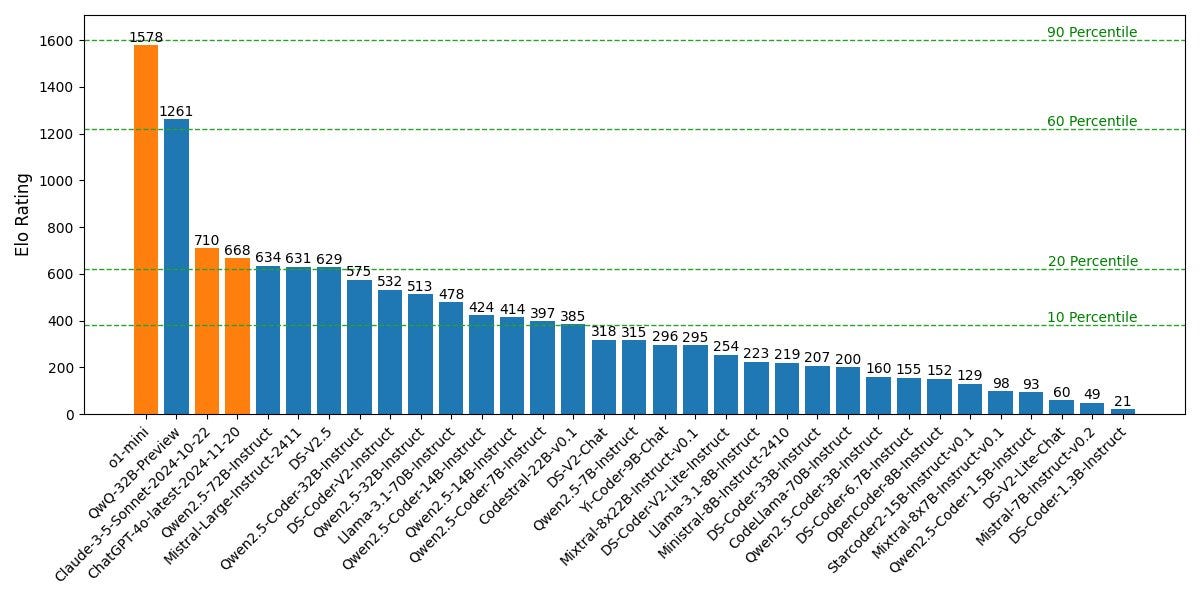
Can LLMs write better code if you keep asking them to “write better code”? https://minimaxir.com/2025/01/write-better-code/
When and how will AI impact society?
Suppose a Terence Tao-level AI was available for $2000 a month. It was as good at math as Tao and as good at programming as John Carmack.
When would you expect this to have a noticeable impact on the lives of average people?
What is the future of space colonization:
Interstellar railguns launch tiny seeds into the far reaches of the cosmos. Each seed contains copies of human minds and the source code for an aligned ASI. Upon arrival, each seed uses advanced nanotechnology to bootstrap itself into the computational infrastructure to run the ASI, which then begins to build the infrastructure for a paradise. Finally, it creates cultured bodies to download the human minds.
Dual Map Matrix Transpose Proof:
If you're like me, and you're just learning math for fun, and it's not research-level math, science fiction has already arrived. You can talk to an infinitely patient personal math tutor. Think Mathematics Stack Exchange, but with live feedback.
For example, I asked: Why is the matrix representation of the dual map S^T the transpose of the matrix representing the linear map S?
It said: [S^T]_{j,i} = v^j(S^T(w^i)) = v^j(w^i ∘ S) = w^i(S(v_j)) = [S]_{i,j}
Me: Wait, in the first equality, why is the right side a scalar? Isn't it a function composition of linear functionals?
It: The notation v^j is overloaded. It can represent both a linear functional that acts on vectors in the original vector space V and, through the natural isomorphism, an element of the double dual space. In this context, v^j := Φ(v_j) where Φ is the natural isomorphism defined as Φ(v)(ϕ) = ϕ(v) such that ϕ is a mapping V→F and v a vector of the vector space V. Since these objects are canonically isomorphic, in practice authors often do not bother with different notations.
BOOM. Fast, seamless, and noiseless.
How to use AI for math:
Although the problem with hallucinations has gotten much better, especially in reasoning models, it can still happen.
The way to use AI for math is as follows:
Recalling facts you have learned before but can't remember in detail. Here you will easily be able to spot hallucinations because you have learned the material before.
Helping you with problems you're stuck on. In this case, even answers that contain errors can provide enough insides to push you over the edge.
Verifying solutions. You have already spent a lot of effort on a problem and want a second opinion. Hallucinations won't be a big issue because you're thoroughly familiar with the context.
Request proofs that you can verify mechanically. If you're reasonably familiar with the subject matter, you'll be able to spot any errors.
Learning new facts by asking the AI to explain a subject in bite-sized chunks. Remember, learning is about pushing yourself over the edge of your knowledge, not asking for facts you don't understand. If you can't verify how the next piece of knowledge fits into everything you've learned, then you're just memorizing. And if you progress in this way, you will probably be able to recognize hallucinations.
Tip: One way to mitigate the possibility of hallucinations is to have different models from different companies check each other's answers.
How has technology influenced society and how will it affect society in the future?
Technology has granted us greater freedom. In the past, we had to spend most of our time searching for and consuming food. Then, we discovered fire, which significantly increased the efficiency of our calorie intake, giving us more time to socialize and think. Next came animal husbandry and agriculture. This allowed only a few people to focus on providing food, while others had the freedom to develop new technologies.
By taking over repetitive tasks and labor-intensive jobs, robots will free up our time for activities that truly enrich our lives. We will have more opportunities to socialize, build stronger families, and raise children in nurturing environments. Additionally, we could spend more time enjoying nature, appreciating art, and exploring the creative and intellectual pursuits that define humanity at its best.
Future advancements in AI are poised to gradually diminish the role of general intelligence in managing daily life. As AI tools become increasingly sophisticated and accessible, tasks that once demanded cognitive effort will be automated or easily handled with AI assistance. For those who embrace these tools, the era of peak societal complexity may already be behind us.
Everyday activities, from filing taxes to operating household appliances, could soon become obsolete. Most technology will likely be controlled through voice commands, enabling effortless use for the elderly and individuals with cognitive impairments. Picture a future where even a toaster can engage in meaningful discussions about quantum mechanics—such seamless AI integration may soon be commonplace.
Autonomous vehicles will transform mobility, granting independence to those unable to drive due to financial constraints, physical disabilities, or visual impairments. This revolution in transportation will further reduce barriers to access and improve quality of life for many.
Could the adoption of nuclear power have prevented climate change?
Throughout 2024, France consistently achieved lower CO2 emissions than Germany – even its peak emissions were less than Germany’s lowest. This striking disparity underscores a critical point: widespread adoption of France's nuclear energy strategy could have largely halted climate change as early as the 1980s.
Delaying this transition has proven significantly more expensive than the proactive measures that could have been taken. Critically, a nuclear-powered energy system would have fostered sustainable economic growth without the severe carbon footprint. Unfortunately, early opposition to this proven technology from environmental activists hampered progress, leading to the challenges we face today.
Key Points on Nuclear Energy
1. Nuclear Waste is Manageable
- High-level nuclear waste, mainly spent fuel rods, is solid, compact, and securely stored. Its volume is minimal compared to waste from other energy sources, and its safety record is impeccable.
- Spent fuel retains over 90% of its potential energy and can be recycled into new fuel, as is already done in several countries.
- Although radioactive, nuclear waste loses most of its radioactivity over time (e.g., a 99% reduction within 40 years), unlike industrial toxins like mercury or arsenic, which remain hazardous indefinitely.
- Proven storage methods, such as dry cask storage, are safe and cost-effective. Claims that deep geological burial (e.g., Yucca Mountain) is essential are unsupported by science and driven by political motives.
2. Nuclear Fuel is Abundant
- Current reactors use only about 1% of the energy potential in uranium. Breeder reactors can utilize nearly 100% by converting U-238 into Pu-239, dramatically extending fuel reserves. Similarly, thorium, which is four times more abundant than uranium, can be fully exploited in breeder reactors.
- Known uranium reserves (6.15 million tons) and vast thorium reserves could power humanity for centuries. Additional uranium exists in unconventional sources like granite, phosphate deposits, and seawater, which holds about 4.2 billion tons of uranium. This supply, replenished naturally, could sustain nuclear energy for millions of years. The Earth's crust contains enough fissionable material to sustain nuclear power for billions of years.
3. Nuclear Power is Safe
- With 440 reactors operating globally, many for over 40 years, and numerous others powering ships and submarines, nuclear energy has an exceptional safety record.
- There have been only three significant accidents in its history, all with minimal casualties. For instance, the Fukushima incident caused no direct deaths, and the UN confirmed no significant health impacts from the event.
4. Nuclear Power is Efficient and Affordable
- The real obstacle is overregulation, not the technology itself. On average, nuclear reactors take 6 to 8 years to build worldwide, with some completed in as little as 3 to 5 years.
A Missed Opportunity
If industrialized nations had embraced nuclear energy decades ago, the fight against climate change would have been faster, cheaper, and more effective. As countries now grapple with costly solutions, it's vital to revisit this proven, scalable, and sustainable energy source.
Miscellaneous:
Some animals really enjoy solving puzzles. Striated caracara's puzzle-solving abilities match that of Goffin’s cockatoos https://www.youtube.com/watch?v=Czx5HW6m54A
H5N1: Much More Than You Wanted To Know https://www.astralcodexten.com/p/h5n1-much-more-than-you-wanted-to
Bryan Caplan with an open letter to Elon Musk. https://www.betonit.ai/p/ex0-an-open-letter-to-elon
“The implications of an important 2023 paper have not been fully understood: it is possible most life in our universe is in the deep oceans of icy moons, orbiting planets that do not orbit stars” https://theeggandtherock.com/p/life-without-stars-stanets-and-ploons
Compute:
Reversible Computing Escapes the Lab in 2025 https://spectrum.ieee.org/reversible-computing
The head of ASML says China's chip industry is stuck 10 to 15 years in the past. https://www.yahoo.com/tech/asml-ceo-claims-chinas-semiconductor-120000409.html
Here’s How Nvidia’s Vice-Like Grip on AI Chips Could Slip https://singularityhub.com/2025/01/03/heres-how-nvidias-vice-like-grip-on-ai-chips-could-slip/
Math:
In simple English, what does it mean for a number to be transcendental? https://blog.plover.com/2021/11/18/
Terence Tao on mathematical notation https://mathoverflow.net/questions/366070/what-are-the-benefits-of-writing-vector-inner-products-as-langle-u-v-rangle/366118#366118
Notation as a Tool of Thought https://www.jsoftware.com/papers/tot.htm
Varieties of mathematical understanding https://arxiv.org/abs/2310.20100
Ukraine:
Rare hand-to-hand combat. This kind of extreme death struggle is very rare. Biting, eye poking, grabbing the blade. https://x.com/GloOouD/status/1874788368892207156
Ukraine released footage showing one of their uncrewed surface vessels (USVs) shooting down a Russian helicopter. https://x.com/bayraktar_1love/status/1874008539263385604
Russian channels such as Russian aviation related Fighterbomber report on the losses after Ukraine's naval drone attack. Not one, but two Mi-8 helicopters were shot down. Both crews likely got killed as well. https://x.com/NOELreports/status/1874396139459338538
Special Operations Forces report capturing a village in Russia's Kursk region. “Rangers from the 6th Regiment of Ukraine’s SOF launched an offensive operation, capturing and clearing a settlement in Kursk Oblast after artillery strikes paved the way. It turned out that alongside Russian troops, North Korean forces were also present in the village.” https://x.com/NOELreports/status/1874038457460293911
Precision strike in Lgov, Kursk region: "The guys are all in the bunker. A lot of people." Direct hit once again. https://x.com/NOELreports/status/1873825413556035728
‘What to do? Where does it hurt?’ — A Russian soldier films the aftermath of an FPV drone strike on a vehicle carrying Russian assault forces in the Donetsk region. https://x.com/NOELreports/status/1874399934893764910